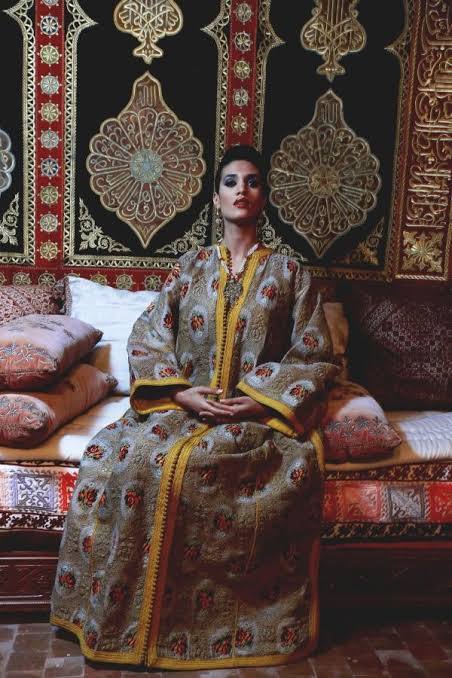
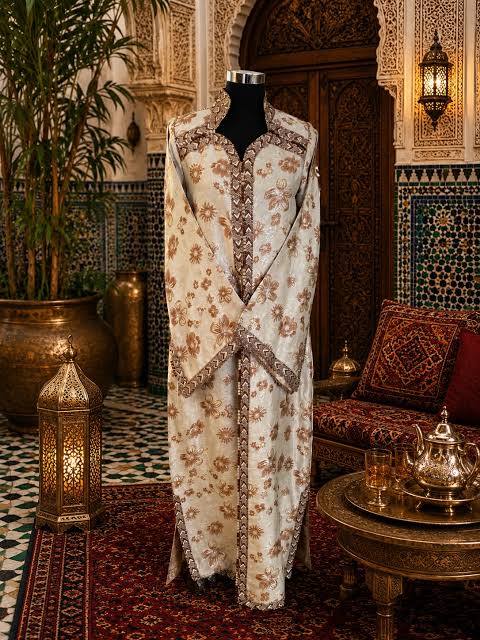
Historical roots from the corridors of the Sultans to the Cosmopolitan The Moroccan caftan is not just a dress; it is a centuries-old heirloom. It began as a costume worn by sultans, Kings, and men of high status in the historical epochs of the Kingdom of Morocco (such as the Marinid and Saadi Reigns), and was a symbol of prestige and authority. Over time, this outfit passed to the Moroccan woman, who was creative in developing it and adding her feminine touches to it, turning from a royal men's outfit into an icon of femininity and luxury associated with weddings and major events.
The secret of workmanship: hand embroidery and "serifs" What distinguishes the Moroccan caftan and makes it a unique piece (Haute Couture) is the complete dependence on the manual work of the "master" (traditional craftsman) Swastikas and knots: silk or Sicilian threads (golden and silver) that are neatly knitted to decorate the front of the caftan. Fassi and Rabat embroidery types of ancient hand embroidery vary in different Moroccan cities, and give the fabric an independent spirit and identity.
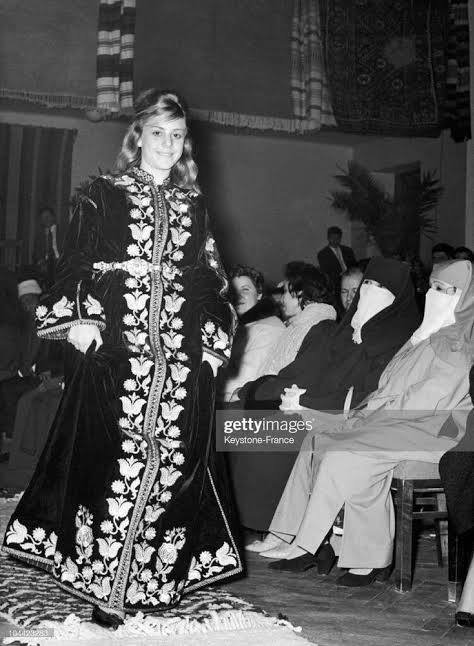
Chronological era: these archival photographs (belonging to the Keystone-France Agency) date back to the period of the sixties of the last century (approximately 1960-1969).
Context: the photo documents a show held to introduce Moroccan heritage and fashion to a diverse and local audience, as these periods witnessed the beginning of the Moroccan kaftan’s exit to the International and French fashion catwalks thanks to Moroccan and foreign designers who were passionate about it.